On July 20, 2026, the United States House of Representatives passed H.R. 1703 (The Choices for Increased Mobility Act) by voice vote. Backed by a bipartisan coalition and championed by leading national advocacy bodies—including the American Association for Homecare (AAHomecare), VGM Group, the National Association for the Advancement of Orthotics and Prosthetics (NAAOP), and the ITEM Coalition—this historic legislation systematically dismantled a decade-old administrative barrier that restricted Medicare beneficiaries from accessing ultralightweight manual wheelchairs constructed from advanced carbon fiber and titanium materials.
For complex rehab technology (CRT) clinicians, physiatrists, occupational therapists (OTs), physical therapists (PTs), and case managers across Baltimore’s elite medical networks—including The Johns Hopkins Health System, the University of Maryland Medical System (UMMS), Kennedy Krieger Institute, Sinai Hospital (LifeBridge Health), Greater Baltimore Medical Center (GBMC), and MedStar Health—H.R. 1703 establishes a streamlined, accessible pathway to long-term joint preservation technology.
This deep dive breaks down the legislative history leading to this moment, the biomechanical and material mechanics of advanced frame construction, the operational mechanics of H.R. 1703, and how Universal Key Solutions collaborates with local seating clinics to elevate patient outcomes.
The Historical Regulatory Glitch: How a 2016 Interpretation Locked Patients Out (1993–2026)
To appreciate the magnitude of H.R. 1703, clinical teams must understand the regulatory environment that previously crippled patient choice:
1993: CMS Establishes HCPCS Code K0005 (Standard Aluminum Calculated Allowables) │ 2000s: Manufacturers Introduce Titanium & Carbon Fiber Frames (TiLite TR, TRA, CR1) │ 2000–2015: "Upgrade Within Code" Allowed Patients to Pay the Material Difference │ 2016: CMS Contractors Reinterpret Policy ➔ Forced Non-Assigned Billing (100% Out-of-Pocket) │ JULY 20, 2026: House Passes H.R. 1703 ➔ Statutory Dual-Coding & Upgrade Protection Restored
1. The 1993 Inception of Code K0005
When the Centers for Medicare & Medicaid Services (CMS) established the K0005 HCPCS code for ultralightweight manual wheelchairs in 1993, commercial wheelchair manufacturing was dominated by aircraft-grade aluminum alloys. Aerospace-grade titanium and high-modulus carbon fiber were not yet deployed at scale for rigid manual frames. Consequently, the Medicare fee schedule allowables for K0005 bases were calculated strictly against standard aluminum production costs.
2. The "Upgrade Within Code" Standard
As medical technology advanced, brands like TiLite revolutionized manual mobility by introducing custom-engineered titanium (e.g., TiLite TR, TRA, ZR) and ultra-light carbon fiber builds (e.g., TiLite CR1). For years, Medicare permitted a simple "upgrade within code" process. If a full-time wheelchair user met the strict clinical necessity criteria for a K0005 frame, suppliers could bill Medicare for the baseline covered K0005 code, while allowing the patient to pay the out-of-pocket price differential only for the upgraded titanium or carbon fiber material.
3. The 2016 Administrative Setback
In 2016, regional Medicare contractors abruptly eliminated the upgrade-within-code mechanism for K0005 bases. Under the revised policy interpretation, if a beneficiary selected a titanium or carbon fiber frame, the supplier was prohibited from billing the base code on an assigned basis. Overnight, suppliers were forced to bill the entire claim as non-assigned, requiring the patient to pay 100% of the entire equipment cost out-of-pocket upfront ($5,000 to $10,000+) before applying for partial reimbursement.
For thousands of newly injured spinal cord patients, stroke survivors, and neuromuscular patients discharging from acute rehabilitation facilities across Maryland, this upfront capital requirement made advanced mobility technology financially impossible.
The Legislative Solution: How H.R. 1703 & S. 247 Fix the System
H.R. 1703, introduced by Representative John Joyce, M.D. (R-PA), alongside its Senate companion bill S. 247, establishes a permanent, statutory remedy without increasing taxpayer burdens:
Creation of Dual-Base HCPCS Coding: Directs CMS to establish two distinct base billing codes under the K0005 ultralight manual wheelchair umbrella: one code specifically designated for bases constructed with titanium or carbon fiber, and a separate code for bases constructed without these advanced materials.
Statutory Upgrade Protection: Reinstates the statutory right for suppliers to bill Medicare for the standard covered K0005 base code while allowing the beneficiary to cover only the direct out-of-pocket cost differential for the specialized frame materials.
Budget Neutrality: Ensures federal Medicare expenditure for baseline K0005 equipment remains completely neutral, protecting the Medicare Trust Fund while granting patients full freedom of choice over their mobility investment.

Biomechanical Architecture & Material Mechanics: Why Material Choice is a Clinical Intervention
In complex rehab technology, frame material selection is not a cosmetic luxury—it is a direct clinical intervention that dictates long-term joint health, daily energy expenditure, and functional independence.
+-----------------------------------------------------------------------------------------------------------------+
|                                        MATERIAL MECHANICS COMPARISON TABLE                                      |
+--------------------------+------------------------------+-------------------------------+-----------------------+
| METRIC                   | AIRCRAFT ALUMINUM (6061-T6)  | SEAMLESS TITANIUM (GRADE 9)   | CARBON FIBER (CR1)    |
+--------------------------+------------------------------+-------------------------------+-----------------------+
| Strength-to-Weight Ratio | Baseline                     | Up to 2x Higher than Aluminum | Industry Maximum      |
| Frame Transport Weight   | Standard (13–18+ lbs)        | Ultra-Light (10–13 lbs)       | Sub-9 lbs (CR1 Frame) |
| Vibration Damping        | Low (Transfers Shock)        | Exceptional (Natural Flex)    | Superior Rigidity     |
| Structural Fatigue Life  | Prone to Micro-Fractures     | Virtually Indestructible      | High Tensile Memory   |
| Primary Clinical Focus   | Standard Daily Mobility      | Spasticity & Neuropathic Pain | Shoulder/RSI Defense  |
+--------------------------+------------------------------+-------------------------------+-----------------------+
1. Upper Extremity Preservation & Rotator Cuff Protection
Clinical studies indicate that over 60% of full-time manual wheelchair users develop upper extremity repetitive strain injuries (RSI), rotator cuff tears, or carpal tunnel syndrome within 10 years of injury. Every single pound added to a wheelchair frame amplifies the cumulative force transferred across the shoulder girdle during the 2,000 to 3,000 propulsion strokes a user executes daily.
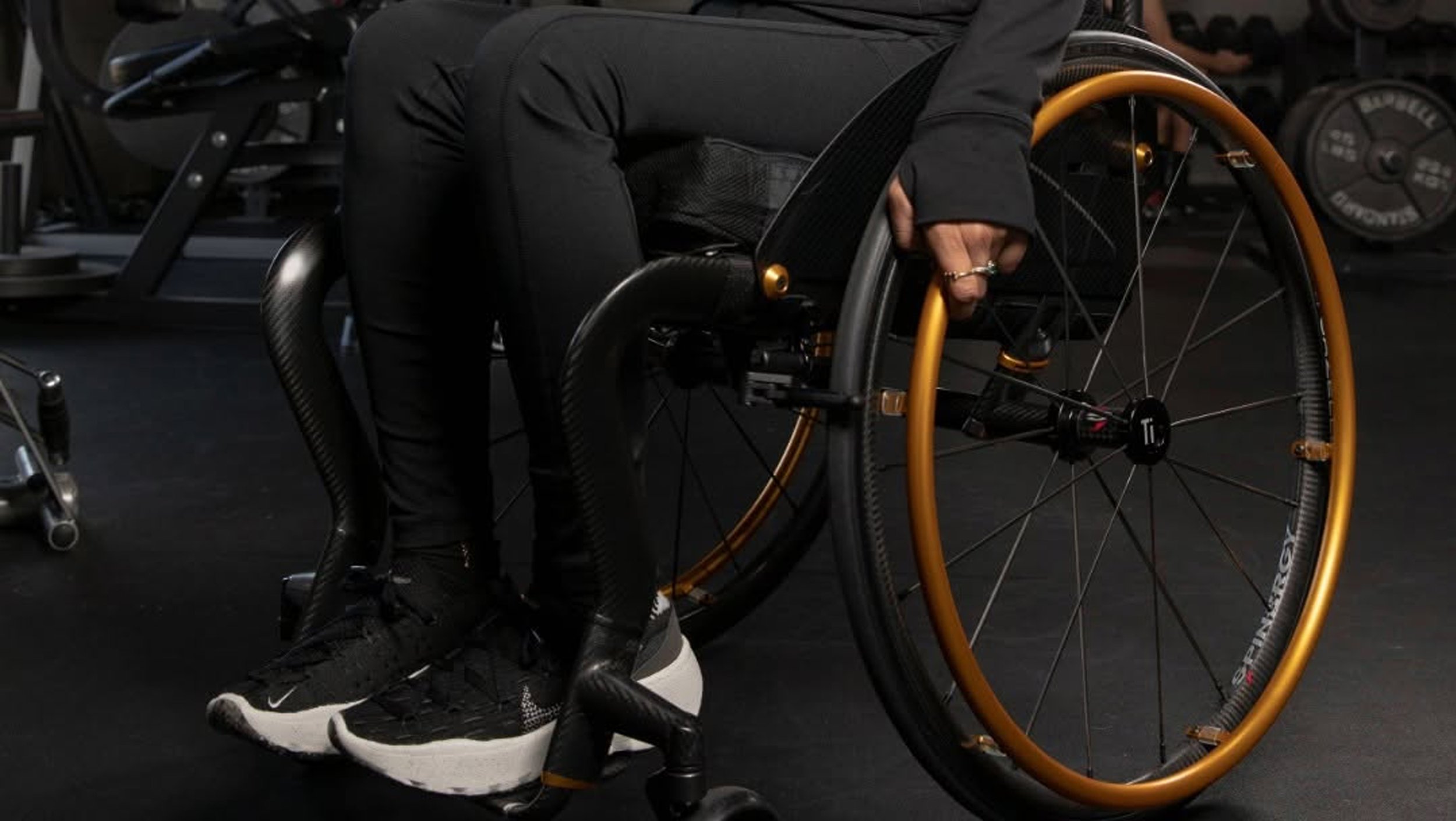
Transitioning a patient to an ultralight carbon fiber rigid frame like the TiLite CR1—which boasts a transport weight under 9 lbs—directly reduces the peak propulsion force required for daily movement, preserving upper body joint integrity for decades.
2. Vibration Damping Dynamics & Neuropathic Pain Mitigation
When a manual wheelchair rolls over outdoor surfaces, brick sidewalks, or uneven terrain, high-frequency ground vibrations travel up through the casters, rigid frame, and seat rail directly into the pelvic floor and lumbar spine.
Aluminum acts as a rigid conductor, transferring micro-impacts directly into the patient's body, which frequently triggers severe flexor spasticity and aggravates chronic neuropathic pain.
Grade 9 Titanium (3Al-2.5V) possesses natural dampening properties, flexing micro-fractionally under impact to absorb high-frequency energy before it reaches the user.
Advanced Carbon Fiber Composites dissipate kinetic energy efficiently, providing a smooth, whisper-quiet ride that conserves user stamina.
3. Integrated Seating: The ROHO Pressure Management Synergy
A high-performance frame is only as effective as its seating surface. Pairing a TiLite rigid titanium or carbon fiber frame with a ROHO High Profile or Smart Relief Cushion establishes an optimal posture-and-pressure ecosystem. ROHO's Dry Floatation® technology distributes pressure evenly across cellular air cushions, minimizing tissue deformation over prominent bony landmarks (ischial tuberosities and sacrum) to prevent Stage 3 and Stage 4 pressure injuries.
Upper Extremity Strain & Propulsion Calculator
Adjust the slider to see how frame material selection directly impacts cumulative shoulder loading over time:
Bridging the Clinical Gap Across Baltimore Healthcare Networks
Executing a successful K0005 evaluation requires tight coordination between the treating clinician, the physiatrist, the ATP, and the equipment provider. Universal Key Solutions serves as an expert technical partner for rehabilitation teams across the Baltimore metro region.
[Inpatient / Outpatient Evaluation] (OT/PT Seating Clinic)
                │
                ▼
[RESNA-Certified ATP Assessment] (Universal Key Solutions)
                │
                ▼
[Precision Configuration] (Permobil / TiLite CR1 / TR / ROHO)
                │
                ▼
[Audit-Proof Documentation & Billing] (K0005 Dual-Code Upgrade)
                │
                ▼
[Final Delivery, Fitting & Post-Acute Follow-Up]
Supporting Baltimore's Premier Seating Clinics & Rehab Pipelines
Whether conducting complex seating evaluations at The International Center for Spinal Cord Injury at Kennedy Krieger Institute, managing post-stroke rehabilitation through MedStar Good Samaritan Hospital, or facilitating acute trauma discharges at Johns Hopkins Hospital or UMMS Rehabilitation, our team provides:
In-Person RESNA-Certified ATP Support: Our Assistive Technology Professionals work directly alongside OTs and PTs during mat evaluations, capturing precise anatomical measurements, pelvic tilt angles, center-of-gravity adjustments, and axle configurations.
Direct Wholesale Manufacturer Access: As an authorized dealer for Permobil, TiLite, and ROHO, we provide direct catalog access to custom dual-tube rigid frames (TiLite TR), mono-tube adjustable frames (TiLite TRA/ZR), and fully integrated carbon fiber systems (TiLite CR1).
Audit-Proof Coverage Documentation: We guide therapists through the rigorous documentation requirements needed to satisfy Medicare, Medicaid, and private insurance coverage criteria for K0005 ultralight coding, preventing administrative denials and delivery delays.
Executive Conclusion & Next Steps for Clinical Partners
The passage of H.R. 1703 marks a new era for Complex Rehab Technology. By removing artificial financial barriers, clinicians can once again prescribe equipment based strictly on biomechanical necessity, joint preservation, and long-term functional independence.
At Universal Key Solutions, we are committed to elevating the standard of post-acute mobility care throughout Towson, Baltimore City, and Baltimore County.
Partner with Universal Key Solutions Today
To schedule an in-service for your therapy department, request an ATP co-evaluation, or streamline your outpatient seating referrals:
📍 Headquarters: Towson, MD
📞 Clinical Intake Line: 410-630-9063
📧 Direct Referral Email: mgmt@universalkeysolutions.com
🌐 Web Portal: www.universalkeysolutions.com